Portfolio case study · AI creative strategy
GraphiteBuilt different
How I turned a real family streetwear project into an identity-safe, multi-layer AI campaign system—and learned where automation creates leverage, where it creates risk, and where human judgment must remain in control.
- Creative strategy
- AI production
- Brand systems
- Workflow design
- Identity protection
The brief
Build proof before scale.
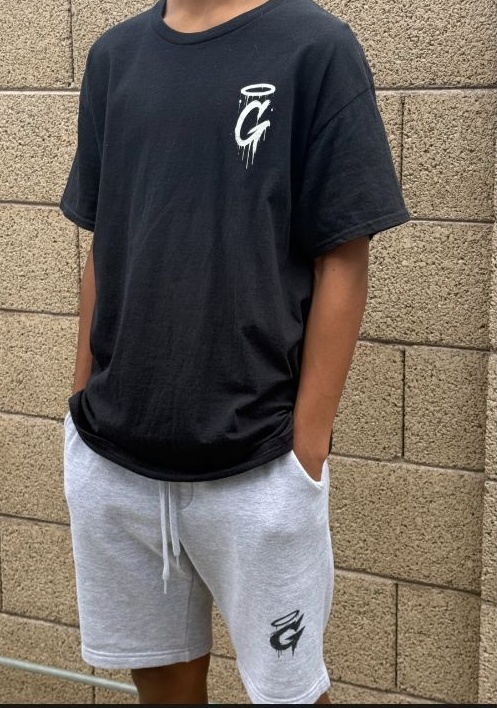
GRAPHITE is a real family streetwear project, so the first client was the hardest kind: people whose product, name, and likeness actually carry the risk. Serving family first made this a genuine validation environment rather than a portfolio exercise.
That turned “make an ad” into something larger — a test of product storytelling, identity-safe content, audio direction, and repeatable operations. If the method held here, it would hold for the next drop.
Start with product truth.
Non-negotiable constraints
- Preserve garment details and logos exactly as photographed
- Founder remains faceless
- No reconstructed face, beard, scar, limbs, or unseen anatomy
- Concept art kept separate from physical merchandise
- Typography stays editable
Diagnose → Clarify → Design → Leverage
Diagnose
Name the real constraint before touching a tool: identity exposure, product fidelity, and unbounded generation cost.
Clarify
Define what a finished master must be true of — faceless, real garment, deliberate spend — so approval is objective.
Design
Storyboard first. Decide which single shot earns motion and which scenes stay source pixels.
Leverage
Turn the one-off build into guardrails, an audio bed, and documentation the next drop can reuse.
One controlled motion shot. Three source-preserving scenes.
GRAPHITE — 15-second vertical product ad
Play the completed 15-second portfolio cut.
Why only one generation
Motion was generated only where it added value. Everything else in the cut preserves source pixels — the original product photograph, the angular-G identity asset, and the GRAPHITE wordmark are used as scenes, not as prompts.
Static holds, text, transitions, and mixing are handled locally, so the garment on screen is the garment that was photographed.
Identity evolution
Campaign architecture
- 0–3s
Hook
Controlled motion opens the piece — the only generated movement in the cut.
- 3–7s
Product truth
The real garment photograph holds the frame. Logos and stitching unaltered.
- 7–11s
Identity
The angular-G asset carries the brand without generating a person.
- 11–15s
End card
GRAPHITE wordmark and stinger. Music rises after 9.3 seconds, beneath the voice until then.
Operational lesson
Automation does not create clarity.
It scales whatever the workflow already contains—including ambiguity, retries and waste.
System redesign
Preflight first
Assets, prompt, and intent reviewed before any paid generation runs.
One corrective retry
A failed generation gets one fix attempt, then the approach changes — not the budget.
Human judgment boundary
Identity, anatomy, and product fidelity are never delegated to a model.
Asset reuse
Approved voice, music bed, and identity assets are recovered, not regenerated.
Render gate
Nothing renders to master until QA on identity, product, and audio passes.
Credit governance
Generate once. Review once. Reuse many times.
Outcome
A master, and a method.
A portfolio-ready 15-second vertical master, plus a repeatable workflow that can produce the next product ad without re-solving identity, audio, or credit questions.
Portfolio truth statement: the approved motion and audio originated through the ElevenLabs and Runway Gen-4 Turbo workflow. The final 15-second master was assembled locally from those approved assets — it was not rendered inside ElevenLabs.
- ElevenLabs
- Runway Gen-4 Turbo
- Local video assembly
- ChatGPT / Codex
- Lovable